When the lights of the Teatro Ariston come on in February, Italy holds its breath. The Sanremo Festival is more than a music event – it is a piece of Italian culture that has brought people together across the country for over seventy years. For five evenings, Sanremo becomes the center of the nation, and all of Italy listens, debates, cheers, and sings along.
Where it all began
The story of the Festival begins in 1951. Italy was rebuilding, and the country was searching for optimism and identity. In the venerable Casino of Sanremo, a few radio pioneers had an idea: a competition in which new songs would be presented and awarded. At the time, no one could have imagined that this would grow into Italy’s most famous music event.
From the Casino to the Teatro Ariston
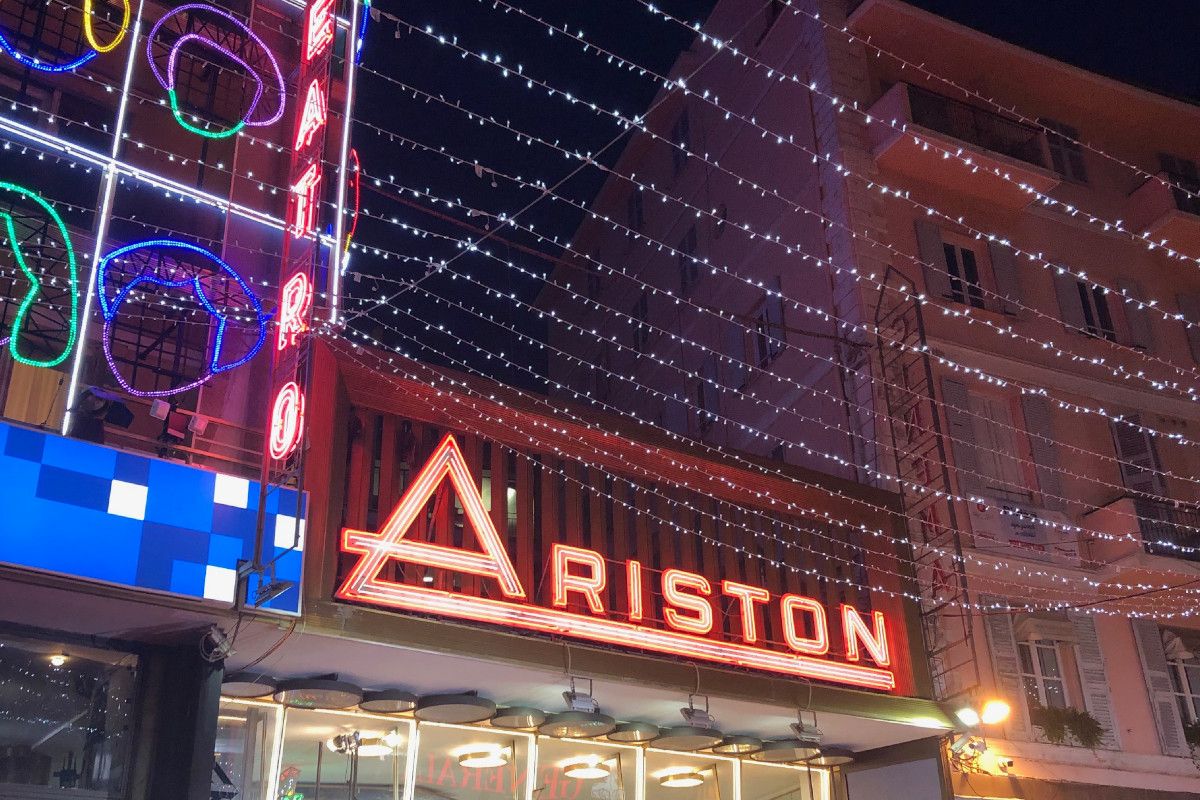
In the 1970s, the Festival moved from the Casino to the Teatro Ariston, where it is still held today. The Ariston is a rather small theater, but every year it transforms into a national stage, adorned with lights, glamour, and cameras. Anyone who performs here knows it: millions of people are watching.
Outside on the streets, television crews, fans, and reporters crowd together. Hotels are fully booked, shop windows are decorated, and even in the bars there is no other topic of conversation. For a few days each year, Sanremo becomes the heart of Italian music.
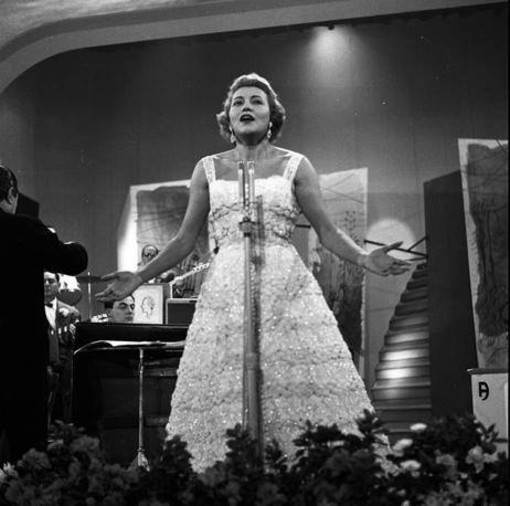
The first winner was Nilla Pizzi, and her song “Grazie dei fiori” (“Thanks for the Flowers”) became a symbol of a new beginning – and gave Sanremo back its nickname as the “City of Flowers.”
Birthplace of the Eurovision Song Contest
Few people know that the Sanremo Festival also inspired the Eurovision Song Contest. The idea of a national music competition broadcast on the radio originally came from here. In 1956, this concept was adopted for Europe – making Sanremo, indirectly, the mother of all European music shows.
Stars who rose to fame in Sanremo
Many Italian artists who are now internationally known started their careers in Sanremo.
- Domenico Modugno won in 1958 with “Nel blu dipinto di blu,” better known as “Volare.” The song became a global hit and stands as a symbol of Italy’s musical lightness.
- Laura Pausini appeared in the Newcomer category in 1993 – her song “La solitudine” made her famous overnight. Today, she fills stadiums all over the world.
- Eros Ramazzotti won in 1984 with “Terra promessa” and became the pop star of an entire generation.
- Andrea Bocelli celebrated his breakthrough in 1994 with “Il mare calmo della sera” – his performance is still considered one of the most emotional in the history of the Festival.
- Gigliola Cinquetti won in 1964 with “Non ho l’età” — a song that later also won the Eurovision Song Contest.
- Francesco Gabbani created a modern, humorous highlight in 2017 with “Occidentali’s Karma,” sparking discussion across Europe.
A stage for emotions
Sanremo is not a festival of quick effects. It lives on emotion, powerful voices, and stories. The audience loves ballads about love, longing, and life itself. Yet every year, modern pop and rap artists also surprise with fresh sounds.
In recent years, artists such as Mahmood (“Soldi,” 2019) and Måneskin (“Zitti e buoni,” 2021) have taken the stage – both later went on to win the Eurovision Song Contest. In doing so, Sanremo has shown that it is not only about tradition, but also about the future.
An entire nation watches
During the Festival week, Sanremo is everywhere: in newspapers, talk shows, on social media, and on every radio station. In the evenings, families sit together in front of the television, discussing songs, outfits, and jury decisions.
Even people who usually have little interest in music follow the spectacle – Sanremo is part of Italian identity.
Hosts and showmasters become iconic figures, and Italian pop culture comes alive across all channels during these days. It is a national ritual – charming, sometimes chaotic, but always full of passion.
Between glamour and history
Anyone who visits Sanremo during the Festival feels a special energy. The city glows, musicians rehearse in hotels, and fans wait outside the Ariston for autographs. But even beyond this week, much recalls the past: the old Casino where it all began, and small commemorative plaques on the walls that remember legendary performances.
Today, the Sanremo Museum features an exhibition with photographs, records, and stage costumes — a piece of music history you can almost touch.
Why the Festival is still alive today
Perhaps the fascination of Sanremo lies in the fact that it stays true to itself. It is glamorous, yet never completely out of touch. It is modern without forgetting its roots. And above all, it tells the stories, year after year, of the things that move people everywhere — love, dreams, farewell, and hope.
For many Italians, the Festival marks the beginning of the year in the cultural calendar. Only after that does the new year truly begin.
A place that breathes music
Anyone who has been in Sanremo during the Festival even once never forgets it. You hear music drifting from open windows, see reporters on scooters, singers giving interviews, and fans holding flowers in their hands. The city seems to live to the rhythm of the songs.
On the final evening, when the winner is announced and confetti falls from the sky, you can feel it: the Sanremo Festival is more than a show. It is a feeling — Italian, warm-hearted, and every year a small piece of magic.